A mortgage discharge removes your lender’s registered interest from your NSW title, and the law requires it to be lodged electronically by the mortgagee or their authorised conveyancer through an ELNO such as PEXA. You cannot lodge it yourself, so whether you are selling, refinancing or paying out your loan, you will need a conveyancer or solicitor to coordinate the process on your behalf.
What a discharge of mortgage is and when you need one
A discharge of mortgage is the legal document that cancels a lender’s registered interest over your property. Once it is registered on the NSW title, the mortgage no longer appears as an encumbrance, and the land is free of that particular lender’s claim. Until that registration happens, the mortgage remains on title even if you have repaid the loan in full, which is why timing and lodgment matter so much.
You will typically need a discharge in one of these situations.
- You are selling your property and settlement is about to occur, so the existing mortgage must come off title before the buyer’s interest is registered.
- You are refinancing to a new lender, which means the old mortgage must be discharged at the same time the new one is registered.
- You have paid out your home loan in full and want the title cleared of the encumbrance.
- You are releasing a guarantor or arranging a partial discharge over part of a larger security.
It is worth distinguishing a discharge from other dealings you might encounter on title. A transfer changes ownership of the property itself, while a release of charge deals with a different kind of security interest, such as one registered under personal property law rather than the Torrens title system. A discharge of mortgage deals specifically with removing the lender’s registered mortgage, and it is this document, not a transfer or a release, that clears the loan security from your title.
Who lodges the discharge and how eConveyancing works in NSW
Every land dealing in New South Wales, including a discharge of mortgage, must now be lodged electronically through an Electronic Lodgment Network Operator, and PEXA is the ELNO used across the state. Only an authorised subscriber, such as a bank, a licensed conveyancer or a solicitor, can access the system and lodge dealings on your behalf. This is a hard requirement, not a preference, under the 100% eConveyancing framework the Registrar General administers in NSW.
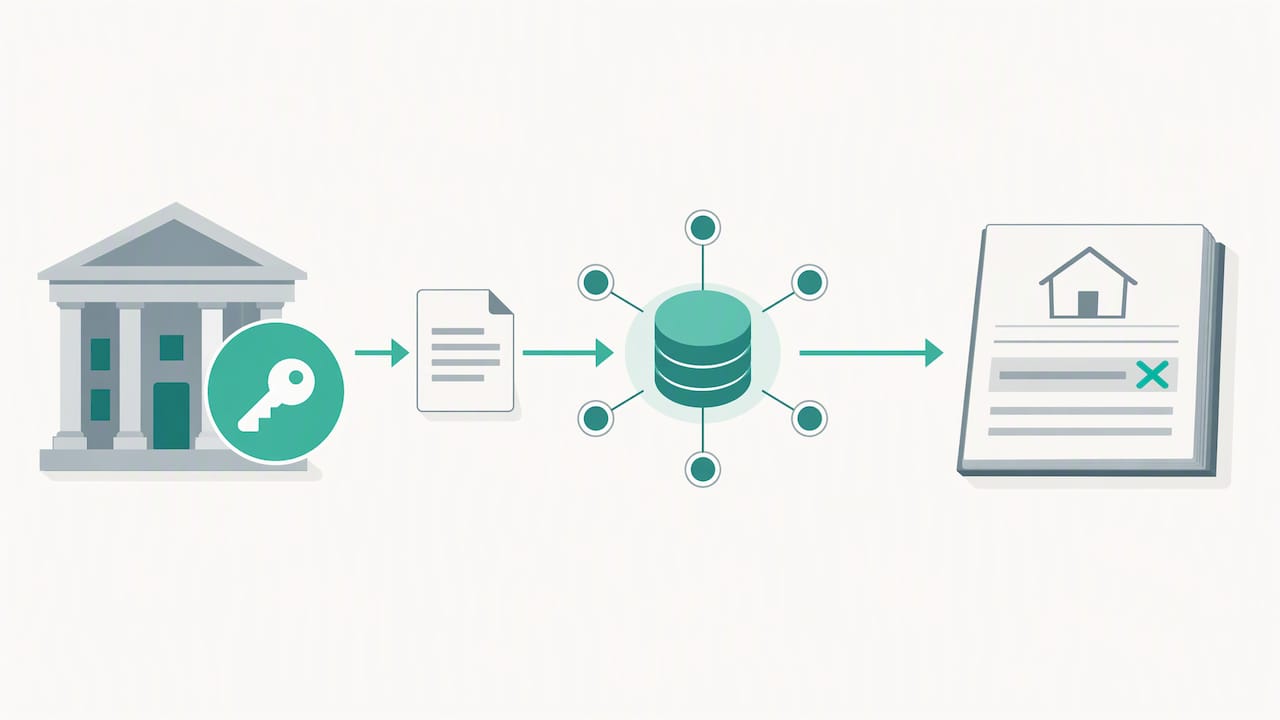
All land dealings in New South Wales must be lodged electronically, and only authorised subscribers can access the ELNO to do so, which is why homeowners cannot self-lodge a discharge even if they hold the paperwork from their bank. This mandate exists to reduce fraud and errors in the title system, but it means your settlement timeline depends entirely on how well your lender, your conveyancer and (if refinancing) your incoming lender coordinate inside the shared PEXA workspace.
In a typical sale or refinance, the parties involved in the PEXA workspace include:
- Your outgoing lender, who lodges the discharge of mortgage as the registered mortgagee.
- Your conveyancer or solicitor, who manages your side of the transaction and liaises with the lender.
- The incoming lender (for a refinance) or the buyer’s representative (for a sale), who registers their own interest at the same time.
Because the dealing is electronic, you will not receive a paper Certificate of Title once the discharge is registered. Under current NSW LRS practice, the lodging party, usually your bank, receives an information notice confirming registration, and that notice should be passed on to you as confirmation the mortgage has come off title. Keep this notice with your other settlement records, since it is the closest equivalent to the old paper discharge document.
Step-by-step: organising a discharge for sale, refinance or repayment
Getting a discharge registered on time comes down to sequencing. Miss a step, and your settlement date can slip.
- Request a dated payout statement from your lender. Ask for a figure calculated to your actual settlement date, since interest accrues daily and an undated or verbal estimate can leave you short at settlement.
- Lodge your discharge authority with your lender as early as possible. Most lenders need this signed authority before their internal team will prepare the discharge for the PEXA workspace.
- Instruct your conveyancer or solicitor clearly, including the names of your outgoing and (if applicable) incoming lenders, so they can set up or join the correct PEXA workspace.
- Confirm the correct e-dealing is used. A straightforward discharge is typically lodged as form 05DM, while a Transfer by Way of Discharge of Mortgage (form 01DT) applies in specific scenarios your conveyancer will identify based on the Registrar General’s guidelines.
- Let the parties finalise the workspace before settlement day. Your lender, your conveyancer and any incoming lender verify figures and documents inside PEXA in the days before settlement.
- On settlement day, the discharge and any new registration happen simultaneously. Funds move, the old mortgage is discharged and, where relevant, the new mortgage or transfer registers in the same electronic transaction.
- After lodgment, confirm you have received the information notice from your conveyancer and check the title search shows the mortgage has been removed.
Pro Tip: Ask your conveyancer to request the discharge authority from your lender the day your settlement date is set, not the week before, since lender processing is often the slowest step in the whole chain.
Costs, fees and timing for a NSW mortgage discharge
A discharge of mortgage involves two separate categories of cost: the government lodgment fee and whatever your own lender charges you.
NSW Land Registry Services sets a statutory lodgment fee of $182.73 (GST inclusive) for a Discharge of Mortgage for the 2026 to 2027 period. This fee is paid regardless of which lender holds your mortgage, and it is separate from anything your bank bills you for processing the discharge itself.
| Cost type | What it covers | Who sets it |
|---|---|---|
| NSW LRS lodgment fee | Registering the discharge on title | NSW Land Registry Services |
| Lender discharge or termination fee | Your lender’s administrative cost to prepare and release the mortgage | Individual lender |
| Break cost (fixed-rate loans only) | Compensation to the lender for ending a fixed-rate loan early | Individual lender |
Lender discharge or termination fees vary by institution and loan product, so check your loan contract or ask your lender directly for the current figure. If you are on a fixed-rate loan, MoneySmart notes that discharging or refinancing before the fixed term ends can trigger a break cost, calculated against how interest rates have moved since you fixed. This is separate from the standard discharge fee, and it is another reason a dated, written payout statement matters: break costs can shift depending on the exact settlement date.
Processing timing also varies by lender. Build in lead time from the moment your settlement date is confirmed, since your lender’s internal discharge team, not the PEXA system itself, is usually the slowest part of the chain.
Common problems and how to avoid delays or disputes
Most discharge delays trace back to the same handful of causes, and nearly all of them are avoidable with early action.
- Lenders’ discharge teams can take time to process a signed authority, so submit yours the moment your settlement date is confirmed rather than waiting until the week before.
- Name discrepancies between your title, your loan documents and your identity evidence are a common reason ELNO lodgments get bounced back for correction.
- Missing or outdated supporting documents can stall a workspace, so confirm with your conveyancer exactly what your lender and the ELNO require before settlement week arrives.
- If you are on a fixed-rate loan, check for break costs before you lock in a settlement date, since an unexpected fee can change your numbers at the last moment.
Pro Tip: Ask your conveyancer to confirm, a few days before settlement, that they can see your discharge document sitting in the PEXA workspace and ready to go, not just promised by your lender.
A good habit is to ask your conveyancer to request the information notice once registration completes, and to keep it with your settlement file. It is your clearest record that the mortgage has actually come off title, and a follow-up title search a week or two after settlement will confirm the same thing if you want independent reassurance.
How West Legal & Associates can help with mortgage discharge in NSW
We manage the discharge process as part of our conveyancing work, so you are not left chasing payout figures or wondering whether your lender has lodged the right paperwork in time for settlement. We handle the electronic lodgment directly, which means your discharge and your sale, refinance or payout can be coordinated in the same workspace without you needing to manage multiple parties yourself.
Our conveyancing service covers the practical steps that tend to cause delays when handled without guidance.
- We request your dated payout statement and discharge authority from your lender well ahead of settlement.
- We prepare clear instructions and manage communication between your outgoing lender, any incoming lender and the PEXA workspace.
- We lodge the discharge with NSW Land Registry Services and confirm registration once it is complete.
If you have a settlement date approaching or you are planning a refinance, our conveyancing team can start the discharge process early and keep it on track. Get in touch to book an initial consultation and avoid the common delays that catch sellers and refinancers off guard.
This article is general information, not a substitute for advice from a qualified lawyer. Consult a qualified legal professional about your own circumstances before acting on anything here.
FAQ
How much does it cost to discharge a mortgage in NSW?
The NSW Land Registry Services lodgment fee for a Discharge of Mortgage is $182.73 (GST inclusive) for the 2026 to 2027 period. On top of this, your own lender may charge a separate discharge or termination fee, and fixed-rate loans can attract additional break costs, so check your loan contract for the exact amount.
Do I need a solicitor to discharge my mortgage?
Yes, because all NSW land dealings, including a discharge of mortgage, must be lodged electronically through an ELNO such as PEXA, and only an authorised subscriber can access that system. A conveyancer or solicitor manages this on your behalf, since homeowners cannot lodge the dealing themselves.
Do I have to pay a mortgage discharge fee?
Most lenders charge a discharge or termination fee separate from the NSW LRS lodgment fee, and this amount depends on your loan product and lender. If your loan is on a fixed rate, MoneySmart notes you may also face a break cost for ending the fixed term early, so it is worth requesting both figures before you set a settlement date.
How long does it take to get a mortgage discharged?
Timing depends mainly on your lender’s internal processing, since the PEXA lodgment itself happens on settlement day once all parties are ready. Submitting your discharge authority as soon as your settlement date is confirmed gives your lender the lead time needed to prepare the discharge before the workspace closes.
Sources
- 2026–2027 NSW LRS fees (NSW Land Registry Services)
- 100% eConveyancing in NSW | Registrar General
- Discharge of Mortgage | PEXA help
- Switching home loans (MoneySmart)
Primary sources and official guidance for further reading
These are the official sources behind the forms, fees and process described above, useful if you want to check current figures or read the full procedural detail yourself before engaging a conveyancer.
- 100% eConveyancing in NSW | Registrar General
- Switching home loans (MoneySmart)
- 2026–2027 NSW LRS fees (NSW Land Registry Services)
- Discharge of Mortgage | PEXA help
- Transfer by way of discharge of mortgage (Registrar General guidelines)
This article is general information only and does not constitute legal advice. Property transactions involve significant financial and legal obligations specific to your circumstances. Contact West Legal & Associates for advice tailored to your situation before exchanging contracts. Liability limited by a Scheme approved under Professional Standards Legislation.