A property title deed is a legal document that historically recorded the transfer of land ownership from one party to another. In New South Wales today, that historical concept has been replaced by something more reliable. Ownership is now proven through the electronic Torrens Title Register, maintained by NSW Land Registry Services and governed by the Real Property Act 1900. Understanding what is a property title deed, and how it differs from the modern electronic register, is the first step to protecting yourself in any NSW property transaction.
What is the Torrens Title system and how does it replace traditional deeds?
The Torrens Title system is the definitive legal framework for land ownership in NSW. It was introduced on 1 January 1863 and provides conclusive, proof of ownership through registration. That guarantee means the register itself is the source of truth, not any paper document you might hold.
Under the Real Property Act 1900, ownership is established by registration, not by possession of a physical deed. If your name appears on the Torrens Title Register as the registered proprietor, you are the legal owner. No paper document can override that.
Legal commentators distinguish “title deed” as a historical concept, while “property title” refers to the current legal ownership record. This distinction matters enormously during disputes, refinancing, and sales. Relying on old terminology can lead to real confusion at the worst possible moment.
| Feature | Historical title deed | Torrens Title system |
|---|---|---|
| Format | Physical paper document | Electronic register folio |
| Proof of ownership | Possession of document | Registration on the register |
| Governing authority | Common law chain of title | Real Property Act 1900, NSW Land Registry Services |
| Risk of error | High (lost, forged, incomplete chain) | Low (government-guaranteed accuracy) |
| Current legal status | Abolished in NSW | Active and definitive |

Why are physical property title deeds no longer issued in NSW?
Paper Certificates of Title were abolished on 11 October 2021. From that date, NSW Land Registry Services ceased issuing physical title documents entirely. Every property ownership record in NSW now exists as an electronic folio in the Torrens Title Register.
This change has a direct legal consequence for buyers. When you purchase property in NSW today, you will not receive a paper deed or certificate at settlement. Ownership transfers electronically, and your name is updated on the register. That electronic record is your proof of ownership.
Many buyers feel unsettled by this, expecting a physical document to take home. The absence of paper does not weaken your ownership. The electronic register is conclusive and carries the full force of NSW law.
Pro Tip: Confirm your ownership after settlement by ordering a title search through NSW Land Registry Services or asking your solicitor to provide a copy of the updated register folio.
What information does the property title record contain?
The Torrens Title Register folio records everything that legally affects a property. Each folio corresponds to one parcel of land, creating a single, clear record of ownership and interests. That one-folio-per-title structure is what makes the system so reliable for buyers, lenders, and courts.
The folio records the following key details:
-
Registered proprietor: The legal owner’s full name and capacity.
-
Legal description: The lot and deposited plan number that precisely identifies the land.
-
Mortgages: Any registered loans secured against the property.
-
Easements: Rights held by others to use part of the land, such as a drainage easement or right of way.
-
Covenants: Restrictions on how the land can be used or developed.
-
Caveats: Notices that a third party claims an interest in the property.
Encumbrances such as easements and covenants affect property use and may not be obvious without a current title search. A mortgage you did not know about, or a covenant restricting development, can derail a purchase, a refinance, or a building approval. Understanding property deeds and their modern equivalent means understanding every interest recorded against the land, not just who owns it.
How do you obtain and verify a property title in NSW?
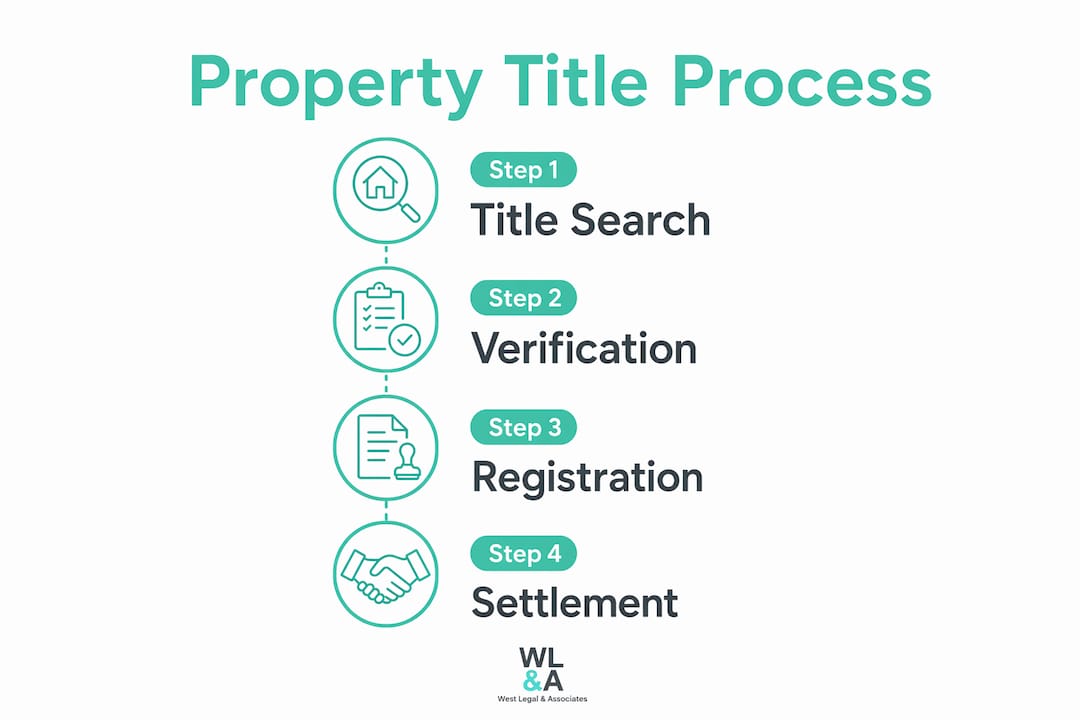
Accessing the title record is straightforward, and you should do it before any significant transaction. A title search retrieves the current folio from the Torrens Title Register and shows you exactly what is recorded against the property at that moment.
A Certificate of Title is a folio copy of the register, not a separate ownership document. Think of it as a printed snapshot of the electronic record at the time of the search.
Follow these steps to obtain or verify title information in NSW:
-
Identify the property. Gather the lot number, deposited plan number, or full street address.
-
Order a title search. Instruct your solicitor to order one on your behalf.
-
Review the folio. Check the registered proprietor, legal description, and all recorded encumbrances.
-
Investigate any encumbrances. Ask your solicitor to explain the effect of any easement, covenant, or caveat before proceeding.
-
Order a fresh search before settlement. A title search immediately before settlement catches any caveats or new charges registered after your initial search.
When buying your first home in NSW, this process is particularly important. First-home buyers often focus on the contract and overlook the title record entirely. That oversight can be costly if an undisclosed encumbrance surfaces after exchange.
Property title verification with West Legal & Associates
Confirming clear title before you exchange contracts is one of the most protective steps you can take in any NSW property transaction.

West Legal & Associates provides conveyancing services that include thorough title searches, encumbrance reviews, and registration management for buyers and sellers across NSW. The firm’s PEXA certification means property settlements are handled electronically and efficiently, with no delays caused by paper processes. Whether you are purchasing your first property or managing a complex sale, West Legal & Associates offers both in-person and online consultations to suit your schedule. Contact the team before you exchange contracts to get advice tailored to your specific circumstances.
FAQ
What is a property title deed in simple terms?
A property title deed is a historical document that recorded land ownership transfers. In NSW today, ownership is proven by registration on the electronic Torrens Title Register, not by any physical document.
Does NSW still issue paper title deeds?
No. NSW abolished paper Certificates of Title on 11 October 2021. All ownership records are now held electronically by NSW Land Registry Services.
How do I prove I own my property in NSW?
Ownership is proven by your name appearing as the registered proprietor on the Torrens Title Register. You can confirm this by ordering a title search through NSW Land Registry Services or your solicitor.
What does a title search show?
A title search shows the current registered proprietor, the legal description of the land, and all recorded encumbrances including mortgages, easements, covenants, and caveats.
When should I order a title search?
Order a title search before exchanging contracts and again immediately before settlement. A fresh search before settlement protects you from caveats or charges registered after your initial review.
This article is general information only and does not constitute legal advice. Property transactions involve significant financial and legal obligations specific to your circumstances. Contact West Legal & Associates for advice tailored to your situation before exchanging contracts. Liability limited by a Scheme approved under Professional Standards Legislation.