A property sale costs breakdown is the list of typical fees and expenses a seller incurs from listing to settlement. For NSW sellers, these costs typically span agent commissions, conveyancing fees, marketing expenses, mortgage discharge charges, and settlement adjustments. Understanding each category before you sign anything protects your proceeds and prevents last-minute surprises at settlement.
What is a property sale costs breakdown for NSW sellers?
The standard industry term for this exercise is a “vendor cost estimate,” though most sellers simply call it a property sale costs breakdown. Either way, the goal is the same: tally every dollar leaving your pocket before the sale price lands in your account.
NSW sellers face five main cost categories. Agent commissions are the largest single expense. Conveyancing and legal fees cover the legal transfer of title. Marketing and advertising costs fund your campaign. Mortgage discharge fees apply if you have an existing home loan. Settlement adjustments reconcile prorated annual charges between you and the buyer.

Getting this estimate right early gives you a realistic net figure. That number drives every negotiation decision you make.
What do agent commissions and fees cost in NSW?
Agent commissions in NSW typically range from 1.5% to 2.5% of the sale price, plus additional marketing expenses. On a $1,000,000 sale, that means $15,000 to $25,000 in commission alone before marketing is added (plus any GST).
The commission rate is not fixed by law. You negotiate it directly with your agent before signing the agency agreement. The agency agreement is a legal contract that must specify the commission and all fees explicitly.
Common negotiable elements in agency agreements include:
-
Commission rate
-
Commission structure: Fixed fee versus percentage versus staggered percentage.
-
Marketing budget: Advertising costs are often listed separately and can be negotiated or capped.
-
Exclusivity period: A shorter exclusive listing period gives you more flexibility if results are slow.
Pro Tip: Compare agent estimates and local market sale prices before signing. Agents who price your property higher to win the listing may cost you more in the long run through extended campaigns and reduced buyer urgency.
How much do estimated conveyancing and legal fees cost?
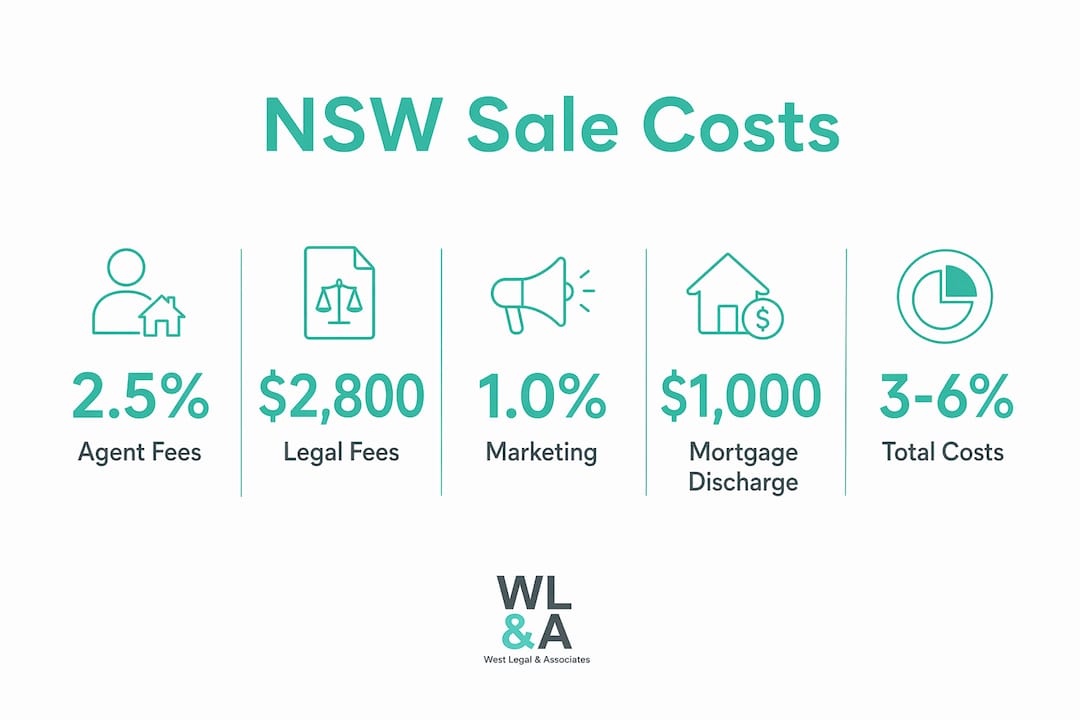
Conveyancing professional fees generally range from $1,800 to $2,800 or more, plus disbursements for mandatory searches and settlement platform fees such as PEXA. That range reflects the complexity of the transaction, not just the conveyancer’s hourly rate.
Your conveyancing solicitor prepares the contract for sale, responds to requisitions from the buyer’s solicitor, and manages the settlement process. In NSW, exchanging contracts is the legal point at which the sale becomes binding, so having qualified legal support before that moment is critical.
Disbursements are the out-of-pocket costs you may incur. These include:
-
Title searches and certificates: Mandatory checks confirming ownership and encumbrances.
-
PEXA platform fees: NSW property settlements increasingly occur through the PEXA electronic lodgement network.
-
Discharge of mortgage registration: A separate government fee for removing the lender’s interest from the title.
Fixed-fee conveyancing quotes are preferable because they give you cost certainty. Variable or hourly arrangements can escalate if the transaction becomes complicated. West Legal & Associates is PEXA-certified, which means settlements proceed electronically via the online platform leading to confident settlements and any issues are easily identifiable.
What other costs do NSW sellers need to budget for?
Marketing, pre-sale preparation, mortgage discharge, and settlement adjustments each add to your total outlay. None of these are optional once the sale process begins.
Marketing and advertising
Marketing and advertising costs can range in the thousands of dollars depending upon the scale of campaign you choose. These may include photography, online listings, signage, and print advertising.
Pre-sale preparation
Repairs, styling, and staging are not legally required, but they often directly affect your sale price. A fresh coat of paint and professional staging may increase the interest in your property.
Mortgage discharge fees
If you have a home loan, your lender charges a mortgage discharge fee depending on the lender and loan conditions. Contact your lender early to confirm the exact amount and any break costs if you are on a fixed rate.
Settlement adjustments
Settlement adjustments prorate annual costs like council rates, water charges, strata levies, and land tax between seller and buyer based on the settlement date. These are calculated using a daily rate multiplied by the number of days each party owns the property in that billing period.
| Adjustment type | Who benefits |
|---|---|
| Pre-paid council rates | Seller receives credit from buyer |
| Unpaid council rates | Buyer receives credit from seller |
| Pre-paid water charges | Seller receives credit from buyer |
| Land tax (if applicable) | Apportioned to settlement date |
If you have prepaid council or water rates, you receive a credit from the buyer at settlement for the unused portion. This is not extra income. It is a reimbursement of costs you already paid.
Pro Tip: Ask your solicitor for a copy of the draft statement of adjustments before settlement day. Reviewing it early lets you identify errors and avoid disputes at the last moment.
How do you calculate total property sale costs?
Calculating your total selling costs requires adding each category together against your expected sale price. Consider using the following approach:
-
Estimate agent commission: Multiply your expected sale price by your agreed commission rate (e.g., $950,000 × 2.0% = $19,000). ALWAYS consider GST.
-
Add conveyancing fees
-
Add marketing costs
-
Add mortgage discharge fee: Confirm with your lender.
-
Factor in pre-sale preparation: Get at least two quotes for any repairs or styling work.
-
Account for settlement adjustments: These are credits and debits, not always a net cost. Your solicitor calculates these at settlement.
Obtaining multiple quotes for agent services gives you a more genuine comparison.
How West Legal & Associates supports NSW property sellers
Selling a property in NSW involves more legal obligations than most sellers anticipate. West Legal & Associates provides conveyancing services for NSW sellers with transparent fee structures, PEXA-certified settlements, and clear explanations of every cost involved.

Whether you are selling your first home or managing a complex transaction, the team at West Legal & Associates offers both in-person and online consultations to suit your schedule. You receive a full breakdown of legal fees and disbursements upfront, so there are no surprises at settlement. Contact West Legal & Associates to discuss your property sale before you sign any agreements.
FAQ
What does a property sale costs breakdown include?
A property sale costs breakdown covers agent commissions, conveyancing and legal fees, marketing expenses, mortgage discharge fees, and settlement adjustments for prorated charges like council rates and land tax.
Can I negotiate agent commission in NSW?
Yes. Agent commissions are negotiable in NSW and must be agreed upon and documented in the agency agreement before the agent begins work.
What are settlement adjustments?
Settlement adjustments prorate annual costs such as council rates, water charges, and land tax between seller and buyer based on the settlement date, resulting in credits or debits on the final settlement statement.
How much should I budget for conveyancing fees in NSW?
Conveyancing fees in NSW typically range from $1,800 to $2,800 or more, plus disbursements for mandatory searches and certificates.
This article is general information only and does not constitute legal advice. Property transactions involve significant financial and legal obligations specific to your circumstances. Contact West Legal & Associates for advice tailored to your situation before exchanging contracts. Liability limited by a Scheme approved under Professional Standards Legislation.